


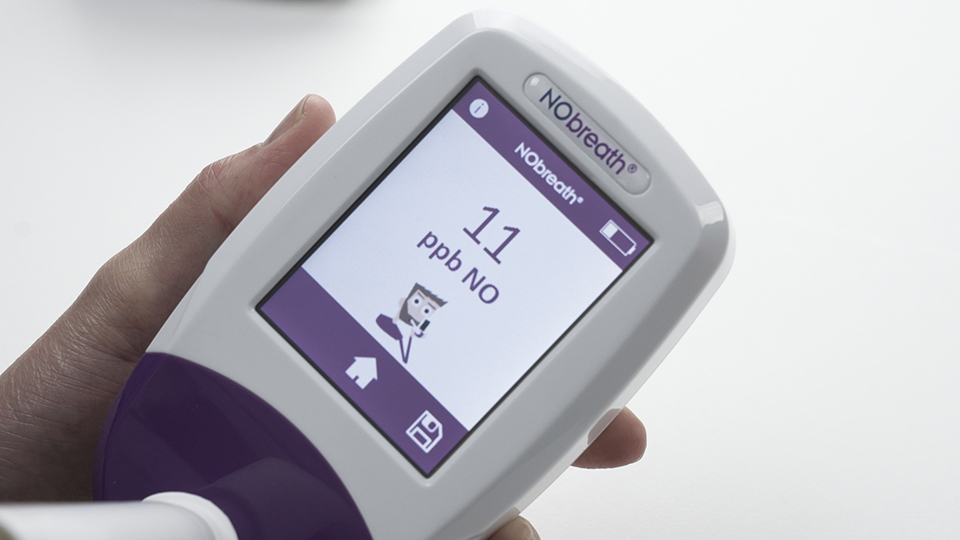
Fractional exhaled nitric oxide FeNO testing is increasingly used across primary care to support asthma diagnosis and monitoring. While a high FeNO result often indicates eosinophilic inflammation, a low FeNO reading can be equally valuable in clinical decision making. Understanding what a low FeNO means helps clinicians avoid misdiagnosis, reduce unnecessary steroid prescribing and confidently explore alternative causes of breathlessness.
What qualifies as a low FeNO reading
FeNO values are measured in parts per billion ppb. Guidance varies, but typical low ranges are:
Adults
-
Under 25 ppb is generally considered low
Children (5–16)
-
Under 20 ppb is considered low
These levels suggest minimal eosinophilic inflammation at the time of testing.
What a low FeNO result suggests
A low FeNO reading indicates that eosinophilic airway inflammation is unlikely. This does not rule asthma out completely, but it provides important diagnostic context.
Clinically, low FeNO suggests:
-
Symptoms may not be caused by type 2 inflammation
-
The patient may be less responsive to inhaled corticosteroids
-
Alternative diagnoses should be considered
-
Treatment escalation may not be necessary
This supports more tailored, evidence based care, particularly during early assessment in primary care.
Exploring alternative causes
Breathlessness, cough and wheeze are not exclusive to asthma. When FeNO is low, clinicians should consider other diagnoses, including:
Potential explanations
-
Viral or post viral cough
-
Anxiety or dysfunctional breathing
-
COPD, particularly in smokers
-
Exercise-induced bronchoconstriction EIB
-
Vocal cord dysfunction
-
Rhinitis or upper airway problems
-
Reflux-related cough
Low FeNO gives clinicians confidence to broaden investigation rather than automatically starting inhaled corticosteroids.
Low FeNO and inhaled corticosteroid use
Unlike patients with raised FeNO, those with low FeNO are less likely to benefit from ICS therapy unless other factors support the diagnosis. This enables clinicians to reduce unnecessary prescribing and ensure inhalers are reserved for patients most likely to respond.
A low FeNO reading supports:
-
Pausing before initiating ICS without further evidence
-
Considering a step down in stable patients
-
Reviewing technique and triggers rather than medication alone
-
Directing time toward breathing pattern support if indicated
Low FeNO can be particularly helpful during annual reviews when patients present asymptomatically.
When low FeNO still matters in asthma
Not all asthma is eosinophilic. Some patients experience symptoms driven by non-type 2 pathways, meaning FeNO may remain low even during exacerbation.
In these cases, repeat FeNO testing and spirometry, alongside symptom scores and trial treatment, play an important role in clarifying the picture.
FeNO is valuable when:
-
Establishing whether ICS withdrawal is safe
-
Assessing children with inconsistent symptoms
-
Monitoring variability during viral seasons
-
Confirming adherence over time through trends
Avoiding unnecessary escalation
Low FeNO promotes smart, targeted prescribing. Rather than assuming symptoms signal uncontrolled asthma, clinicians can use objective data to pause, reflect and re-evaluate.
This protects patients from:
-
Side effects of unnecessary steroids
-
Medication burden
-
Delayed identification of the true cause
It also supports NHS priorities around reducing drug waste and eliminating preventable variation.

Comments are closed.